Skip to content

Memory page examples

Memory page examples

A memory page can begin with a photograph and a few words, then become part of a wider family story. These examples show two ways to start.

The Rossi family is fictional. The illustrated memories show how a page could be used; they are not customer testimonials or historical evidence. Only this demonstration archive is public. Your own family archive is private to invited members.

Example 01 · Remembering someone

The things that made Frank, Frank.

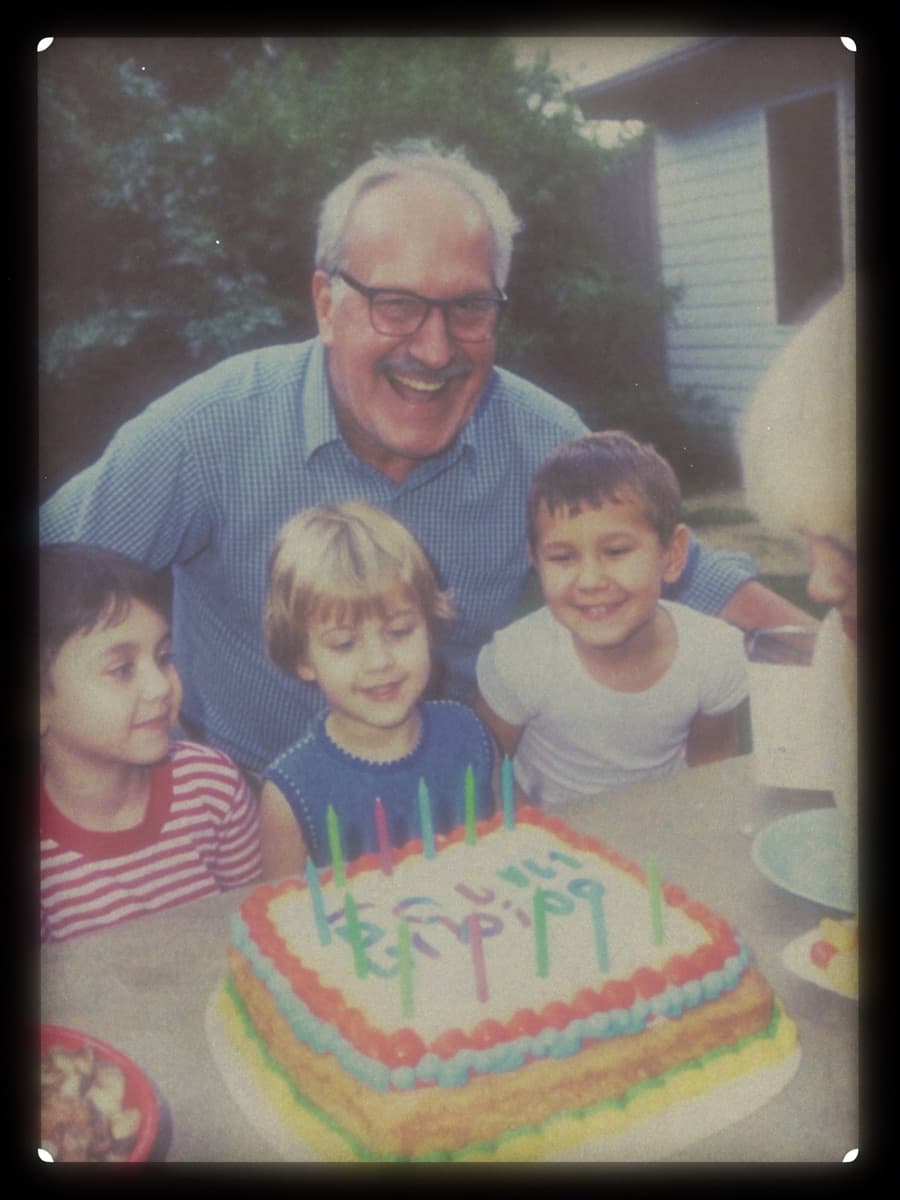
A family photograph sits beside a daughter’s memory of Sunday calls. Together, they say more than a name and a pair of dates.

  • Begin with the person. Their name, years and photograph give the page a home.
  • Keep the everyday details. One small story is enough for a first contribution.
  • Leave room for other voices. Invite relatives to add what they remember.
Open the sample memory page →
Frank laughing with his grandchildren at a birthday

Frank Rossi

1931 – 2008

Dad, Grandpa. Always had a story.

Maria · DaughterA memory of Dad

He called every Sunday. Even when he had absolutely nothing to report. I miss those calls.

A birthday cake surrounded by Frank and the grandchildren

Shared with the family

Paul · Son

Found Dad’s photos from the drive west.
Explore their memories

Example 02 · Sharing family history

A family archive with more than names.

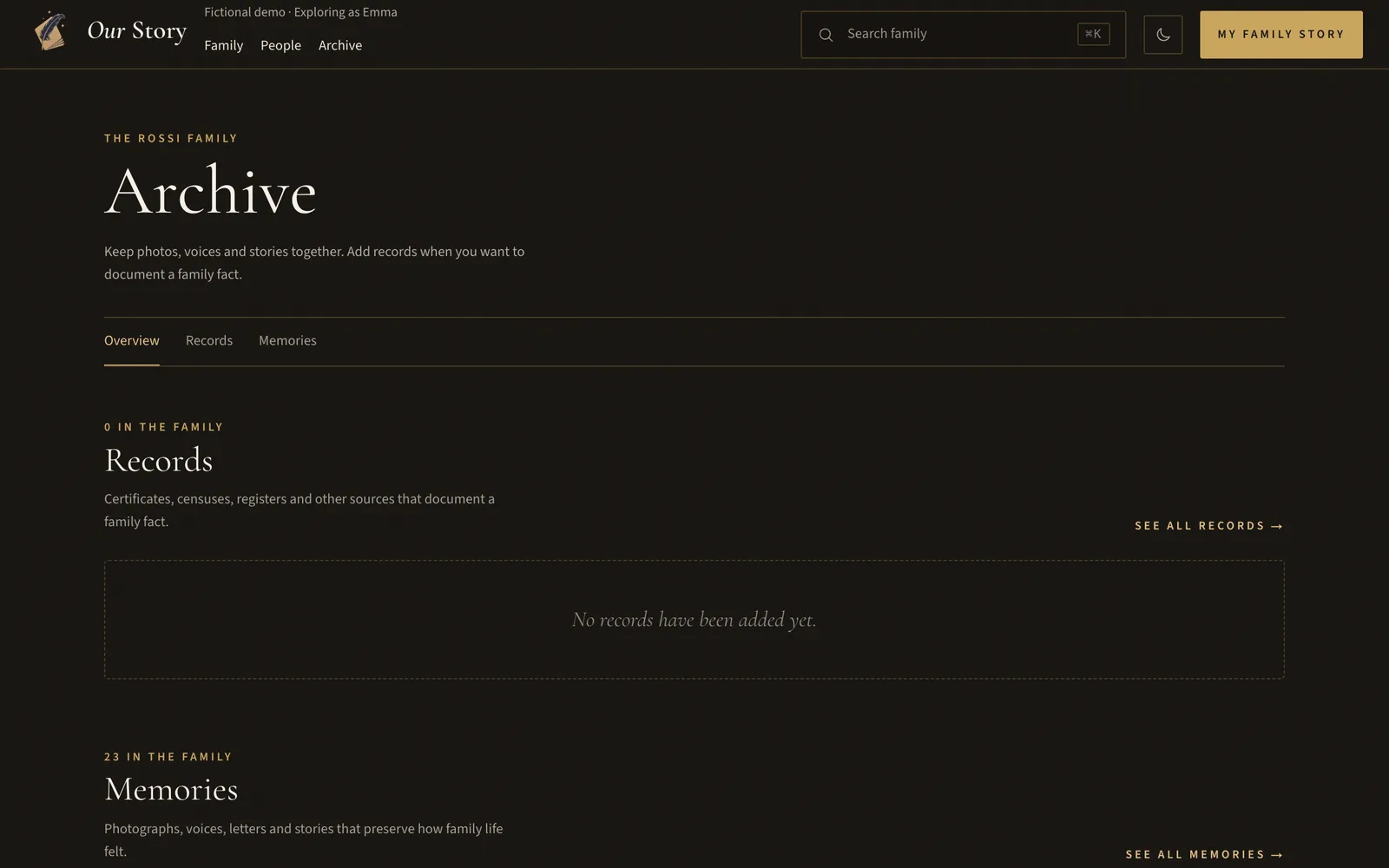
The Rossi archive connects people with photographs, stories and records. A relative can start with someone they recognize, then follow the family connections.

The fictional Rossi family archive, with photographs, memories and records to explore
The fictional Rossi family, shown in Our Story. Open the sample archive to explore.

Give each item context. Explain who it concerns, where it came from and what you know about it.

Keep evidence distinct. Preserve an original record separately from a recollection or an unresolved interpretation.

Make it portable. Keep original files and a readable archive export alongside supported family-tree data.

Delivering research to clients? See the Professional workflow →

Can I use these examples as a starting point?

Yes. Begin with the same simple structure: a person, one photograph or story, and an invitation to someone who can add context. Creating a page starts your own archive; it does not copy the fictional family or their material.

For genealogy work, bring a small GEDCOM branch first, review it, and add original documents and source details separately.

Check your family-tree file before importing →

Start with someone who matters.

30 days to try Our Story. No card required. Or explore the fictional Rossi family first.

See plans and limits